|
The breaker is come up before them: they have broken up, and have passed through the gate, and are gone out by it: and their king shall pass before them, and the LORD on the head of them. Mic 2:13 THE HARVEST OF GREED AND INJUSTICE Micah ch 1:1-16 dealt with sins against the first table of the law; ch 2 deals with those against the second. Evil must sooner or later befall those who devise evil against their neighbors, covet their goods, and oppress their persons. So absolute would be the destruction, that estates would no longer descend from father to son, or be measured by lot, Mic_2:5; and the people would become hard and callous to the prophet’s voice, Mic_2:6. Yet through it all God’s Spirit would yearn over His people, Mic_2:7-13; His words would still comfort humble souls. But the cruelty of men who despoiled their poor neighbors, not only of their ornaments but of the tunic next their skin, would bring disaster upon the entire nation. The guilty people must prepare to arise and depart, for Canaan could no longer be their home. But even from captivity God would restore His people, breaking the way through walls of difficulty. Our Breaker is the Lord Jesus who broke the way for us from the prison-house of death. Let us follow Him as He passes on His way to victory. (F.B. Meyer) The Breaker "Micah lived near the time of the Babylonish Captivity. It is a prominent subject in the prophetic writings. Resembling, as it did, the spiritual captivity of God’s people, it is made the groundwork of many glorious predictions relating to the Lord Jesus Christ and His salvation. In this light commentators regard the prediction of the text. It has a reference to the captive Jews, and their liberator Cyrus; but it looks further. In Christ and His ransomed people it has its real, complete fulfilment. It sets forth the Lord Jesus: I. As interposing for His people in a peculiar character. “The breaker.” The demolisher. One who beats down before them all barriers and impediments that obstruct their way. The figure places us where we really are, far off from God and His kingdom, with many obstructions lying in between God’s kingdom and us; with more than distance to be got over—with barriers and obstacles to be surmounted. What are these? Some of them lie out of us, some within us. Out of us is: 1. The judicial displeasure of God. It is our guilt which has subjected us to His wrath. 2. The opposition of Satan. By Satan is meant, not just one being, but a numerous host of beings in the spiritual world opposed to our happiness. Through this difficulty Christ breaks. Not, as we might have supposed, by exterminating these enemies of our salvation, scattering them out of our path; but in first making His own way to heaven in man’s form through them, and then by communicating strength to His people to do as He has done—withstand these enemies, force their way through them, and tread them down. Within His people, what is there to impede them in their way to heaven? We may say that everything within them is an impediment to them in their way. There is nothing within fallen man, naturally, that does not tend to carry him away from God, rather than to lead him to God. See: 1. The natural self-sufficiency and pride of heart, which we may call self-righteousness. But Christ comes, and touches the proud heart of man, and this barrier in it falls down. 2. There is the unGodliness of the heart. Almost as stiff a barrier in the way of our salvation as its pride. Here too the heavenly Breaker comes in. He opens the sinner’s heart, communicates to it a holy principle; and this principle, warring against the unholiness in him, gradually breaks its strength, masters and dethrones it. 3. The unbelief of our hearts. This leads to hesitation and delay, under one excuse after another. II. The escape of God’s Israel in consequence of Christ’s interposition for them. Two remarks: 1. A great change has taken place in the spiritual condition of Christ’s people, in consequence of what He has done for them. 2. The people really delivered by Christ cooperate with Him in their deliverance. You must be warned against imagining that you have one particle of spiritual ability or strength of your own. But you must be warned as earnestly against taking up with what may be termed a passive religion. III. The high privilege of these escaped liberated men after their escape. “Their king shall pass before them, and the Lord on the head of them.” This is more than saying we shall have the Lord for us, we shall have Him with us. It indicates not merely the presence, but the near presence of the Lord. It may be a figure taken from the cloudy Pillar hanging over Israel, overshadowing them. It is an assurance at once of discipline and of safety on our way to heaven. (Charles Bradley, M. A.) Christ the Breaker "The great work of our Divine Redeemer, by which He has broken for the captives the prison house of their bondage. Many of us know not the bondage in which we are held. We are chained by sin, chained by the habit of evil with a strength of which you never know till you try to shake off. Jesus Christ as the Opener, and the Path, to God. Our condition is not only one of bondage to evil, but also one of separation from God. We do not know God as He is, except by Jesus Christ. It is only the God manifest in Jesus Christ that draws men’s hearts to Him. That God that is in Christ is the only God that humanity ever loved. He, by the fact of His Cross and Passion, has borne and borne away the impediments of our own sin and transgression which rise forever between us and Him, unless He shall sweep them out of the way. Christ is the Breaker as the Captain of our life’s march. “When He putteth forth His sheep, He goeth before them.” He is the Breaker for us of the bands of death. Christ’s resurrection is the only solid proof of a future life. It is not possible that we should be holden of the impotent chains that He has broken." (A. Maclaren, D. D.). Charles Spurgeon-Morning and Evening "The breaker is come up before them." — Mic_2:13 "Inasmuch as Jesus has gone before us, things remain not as they would have been had he never passed that way. He has conquered every foe that obstructed the way. Cheer up now thou faint-hearted warrior. Not only has Christ travelled the road, but he has slain thine enemies. Dost thou dread sin? He has nailed it to his cross. Dost thou fear death? He has been the death of Death. Art thou afraid of hell? He has barred it against the advent of any of his children; they shall never see the gulf of perdition. Whatever foes may be before the Christian, they are all overcome. There are lions, but their teeth are broken; there are serpents, but their fangs are extracted; there are rivers, but they are bridged or fordable; there are flames, but we wear that matchless garment which renders us invulnerable to fire. The sword that has been forged against us is already blunted; the instruments of war which the enemy is preparing have already lost their point. God has taken away in the person of Christ all the power that anything can have to hurt us. Well then, the army may safely march on, and you may go joyously along your journey, for all your enemies are conquered beforehand. What shall you do but march on to take the prey? They are beaten, they are vanquished; all you have to do is to divide the spoil. You shall, it is true, often engage in combat; but your fight shall be with a vanquished foe. His head is broken; he may attempt to injure you, but his strength shall not be sufficient for his malicious design. Your victory shall be easy, and your treasure shall be beyond all count." "Proclaim aloud the Saviour's fame, Who bears the Breaker's wond'rous name; Sweet name; and it becomes him well, Who breaks down earth, sin, death, and hell." Rev 7:17 For the Lamb which is in the midst of the throne shall feed them, and shall lead them unto living fountains of waters: and God shall wipe away all tears from their eyes.  Simon Peter therefore beckoned to him, that he should ask who it should be of whom he spake. He then lying on Jesus' breast saith unto him, Lord, who is it? Jesus answered, He it is, to whom I shall give a sop, when I have dipped it. And when he had dipped the sop, he gave it to Judas Iscariot, the son of Simon. And after the sop Satan entered into him. Then said Jesus unto him, That thou doest, do quickly. Now no man at the table knew for what intent he spake this unto him. For some of them thought, because Judas had the bag, that Jesus had said unto him, Buy those things that we have need of against the feast; or, that he should give something to the poor. He then having received the sop went immediately out: and it was night. Joh 13:24 The Kindness of the Traitor In the circle of the Twelve, Judas represented the carnal idea of the Messiah, which was directly opposed to the spirit just manifested in the washing of their feet. If he would not humble himself and renounce that spirit, Judas must depart; and a great sense of relief must have been experienced by our Lord, and to an extent by them all. The people of the East lay rather than sat at table, each guest having his left arm on a cushion, so as to support the head, the right being at liberty for eating. Thus the head of each was near the breast of his companion on the left. Such was the place of John with regard to the Master at the Last Supper, and it was easy to whisper the inquiry of Joh_13:25. In the course of the Paschal meal, the father would offer to the guests pieces of bread dipped in a sauce of fruit, representing the fruits of the Promised Land. It was a sign of special attention, and was one more appeal to the conscience of Judas. He might yet have found pardon. But John saw, as his attention was attracted to him, a change pass over his features, which indicated that the traitor had finally cast the wavering balance on the side of Satan. (F.B. Meyer)  He then having received the sop went immediately out: and it was night — Joh_13:30 He Made His Bed in Hell What first strikes us here is the utter loneliness of Judas. No word-painting, however vivid, could give a deeper impression of that than these few words of John: "He ... went immediately out: and it was night." Within, there was light and gladness, and the richest fellowship this world had ever known. For Christ was there, and John was leaning upon Jesus' bosom, and the talk was on high and holy themes that evening. Outside was fierce hostility. Outside was dark. And no man drove out Judas. No push and curse hurried him to the door. It was the momentum of his own heart and life that impelled him to choose the darkness rather than the light. Shall we follow Judas into the dark street? He turns and looks, and the light is gleaming from the window of the upper chamber. He hurries on, and the streets are not empty yet. A band of young men, like himself, goes singing by. The sounds of evening worship come stealing from the houses. And everything that tells of love, and breathes of fellowship, and speaks of home, falls like a fiery rain on Judas' heart. The loneliness of Judas was intolerable. He had made his bed in hell. A friend of mine was once preaching on that text in the Assembly Hall in Edinburgh. And when he left the hall and was stepping homewards, a young man rushed across the street and grasped him by the arm and cried, "Minister, minister, I have made my bed in hell," and disappeared. And the lonely misery of that cry will ring in my friend's ears till his dying day. There was a loneliness in it like that in Judas. He was estranged, apart. "He then having received the sop went immediately out: and it was night." In a Sense Everybody Is Lonely There is a sense in which every person is lonely. Each has his different road, his different trial, his different joy; and these differences are invisible barriers between us, so that even in fellowship we walk apart. We say we know that woman thoroughly, and we believe we do, till someday there comes a new temptation to her, or a new chance to be heroic, and all our reckoning are falsified, and there are depths our plummet never sounded. I cannot utter forth all that I am. Gesture, speech, even music are but rude interpreters. The dullest has his dream he never tells. The very shallowest has his holy ground. There is an isolation of the soul that brings the note of pathos into history, and makes me very reluctant to judge my friend, and leads me to the very feet of Christ. In a Sense Christ Was Lonely For there is a deep sense in which Christ was lonely too. And it is strange that on the night of the betrayal, perhaps the two loneliest figures in the world were the sinful disciple and his sinless Lord. But oh, the world of difference between the two! Christ lonely because He was the Son of God, bearing His cross alone and going out into the glory. And Judas lonely because he was the son of perdition, with every harmony destroyed by sin, and going out into the night. Now towards which figure are you making, friend? For towards one or the other your feet are carrying you. There is a loneliness upon the mountain top. There is a loneliness in death and in the grave. And the one is the isolation of the climbing heart, and the other the isolation of the lost. Towards which are you headed? Is it "To the hills will I lift up mine eyes" or "The wages of sin is death"? Sin Separates This, then, is one continual effect of sin. In every shape and form, in every age and country, it intensifies the loneliness of life. We talk of social sins. All sin is ultimately anti-social. We hear of comradeship's based upon common vices. All vice in the long run grinds the very thought of comradeship to powder. Sin isolates, estranges, separates; that is its work. It is the task of God ever to lead us to a richer fellowship. It is the work of sin, hidden but sure, to make us lonelier and more lonely till the end. From all that is best, and worthiest, and purest, it is the delight of sin to separate. And I want to touch on the three great separations that sin brings, making life a lonely thing. Sin Separates Man from His Ideal First, then, sin separates man from his ideal. When I have an ideal, I can never be quite lonely. When I have the vision beckoning me on, when I have something to live for and to struggle for higher than coin or food, there is a fervor in my common day, and a quiet enthusiasm for tomorrow, that are splendid company for my secret heart. And even if my ideal be a dream, it is so. In the famous battle between the clans on the North Inch of Perth, rendered immortal in the story of Sir Walter Scott, you will remember how the old chieftain Torquil sent out his sons to fight for Hector. And as one son after another fell under the smiting blows of Hal of the Wynd, the old chief thundered out, "Another for Hector," and another of his sons stepped forward to the battle. And they were all slain, every one of them, for Hector—and Hector was a coward. Let the ideal be a dream, yet men will fight for it; and fighting, the heart forgets its loneliness. And the work of sin has been to separate the world from its ideals—to blot out the vision and to say to men, Let us eat and drink, for tomorrow we die. Sin lays the emphasis on what I see. Sin holds me back from what I would be, and binds me a prisoner to what I am. Until, at last, through years of weary failure, all that we hoped and longed to be is gone, and the beckoning hands have vanished, and the vision is fled, and we are alone with our own poor selves. Sin separates a man from his ideal. Judas had his ideal once, but the devil entered him, and the ideal died out; and from that hour Judas drew apart. Sin Separates Man from Man Not only does sin separate man from his ideal, it separates man from man. When Cain slew Abel, he became an outcast. When David fell, he had to fly. When Peter denied Christ, he went out and wept bitterly. Sin broke life's ties for them, sundered the bonds that bound them to their fellows. Read over every narrative of sin within the Bible, and underneath the outward form of it—it may be passion, envy, treachery, revenge—you will detect, from Genesis to Revelation, the sundering of ties between man and man. And sin is always doing that. There is not a passion, not a lust or vice, but mars and spoils the brotherhood of life, and tends to the loneliness of individual souls. God meant us to be friends. God has established numberless relationships. And God is righteousness and God is love, and the Spirit of righteousness and love inspires them all. And sin has been unrighteous from the first, and shall be cold and loveless till the end. O sin, thou severing and separating curse! There is no tie so tender but my vice will snap it. There is no bond so strong but sin will shatter it. It separates the father from his child; it sunders hearts; it creates distances within the home, till the full harmonies of life are lost, and the deep fellowships of life impossible. And the world is lonelier because of sin. And Jesus Christ knew that. Christ saw and felt sin's separating power. And so the Gospel, that rings with the note of brotherhood, centers in Calvary upon the fact of sin. The social gospel is but a shallow gospel, false to the truth and alien from Christ, unless it roots itself in the divine forgiveness and the inspiring power of the Holy Ghost. The poet Whittier tells a story of the Rabbi Nathan, who long lived blamelessly but fell at last, and his temptation clung to him in spite of his prayers and fastings. And he had a friend, Rabbi Ben Isaac, and he felt that his sin had spoiled the friendship. But he would go to him and speak to him and tell him all. And when they met, the two embraced each other; till Rabbi Nathan, remembering his sin, tore himself from his friend's arms and confessed. It was the separating power of sin. But when Rabbi Ben Isaac heard his words, he confessed that he too had sinned, and he asked his friend to pray for him as Rabbi Nathan had asked himself. And there in the sunset, side by side, they knelt and each prayed with his whole heart for the other. "And when at last they rose up to embrace, each saw God's pardon in his brother's face." Sin, separation—pardon, brotherhood; it is the order of the universe and God. Sin Separates Man from God And so sin separates a man from his ideal and a man from men. But the most awful separation of all, the one that reaches the very heart of loneliness, is this: sin separates a man from God. I can never be lonely in God's fellowship. When I detect His glory in the world, and trace His handiwork in field and sunset; when I recognize His voice in conscience, when I feel the power of His love in Christ; "there is society where none intrudes," there is the sweetest company in solitude; and I may dwell alone, but I can never be a lonely man. "For me to live is Christ," said the apostle Paul; and the friendship of God was so intense for him, that even in the prison at Philippi he had society. (Devotional Sermons) +++++++++++++++++++++++++++++++++++++++++ DEALING WITH LONELINESS | DR. PETER S. RUCKMAN (AUDIO ONLY) | NEVER ALONE | NOVEMBER 3, 1980 https://youtu.be/WIplOwFrvIA?si=KHvYCWJYyZPtf1Su  But from the first it has been sin's great triumph to separate the soul from God; and the deepest loneliness of sin is this, that it blinds me to One whom not to see is death, and bars me from the fellowship of Him whose friendship is of infinite value to my heart. If in the sky and sea, if in the call of duty, if in the claims of men, if in the love of Christ, if in all these I see and hear no God. this is a lonely world. And sin has blinded me, and made lonely, as the prodigal was lonely when far from his father and father's home. Shall I arise and go to Him tonight? Shall I return by the way of Calvary to God? I have been separated from holiest and the best. I have been living far from goodness and from God. But -Just as I am, without one plea, But that Thy blood was shed for me, And that Thou bidd'st me come to Thee, O Lamb of God, I come, I come! —Charlotte Elliott  Behold, the LORD'S hand is not shortened, that it cannot save; neither his ear heavy, that it cannot hear: But your iniquities have separated between you and your God, and your sins have hid his face from you, that he will not hear. For your hands are defiled with blood, and your fingers with iniquity; your lips have spoken lies, your tongue hath muttered perverseness. None calleth for justice, nor any pleadeth for truth: they trust in vanity, and speak lies; they conceive mischief, and bring forth iniquity. They hatch cockatrice' eggs, and weave the spider's web: he that eateth of their eggs dieth, and that which is crushed breaketh out into a viper. Isa 59:1-5 "Much of our suffering in life results from our sins, which cut off God’s health and help. Let us not blame Providence, but set ourselves to discover the cause of controversy. When the law courts-the fountains of justice-are demoralized, the community is in a hopeless condition, Isa_59:3-4. Instead of stamping out evil in the egg, the sinful heart hatches it out, and it yields the poison of vipers, Isa_59:5. Ah, the hapless state of the ungodly! Their feet, and their thoughts, and their paths, are fatal to the peace of others and to their own. The way of peace can be entered only at the Cross, and maintained only by constant watchfulness. See Luk_1:78-79. Luk 1:78 Through the tender mercy of our God; whereby the dayspring from on high hath visited us, Luk 1:79 To give light to them that sit in darkness and in the shadow of death, to guide our feet into the way of peace. Israel’s confession, Isa_59:9-15: Isa 59:9 Therefore is judgment far from us, neither doth justice overtake us: we wait for light, but behold obscurity; for brightness, but we walk in darkness. Isa 59:10 We grope for the wall like the blind, and we grope as if we had no eyes: we stumble at noonday as in the night; we are in desolate places as dead men. Isa 59:11 We roar all like bears, and mourn sore like doves: we look for judgment, but there is none; for salvation, but it is far off from us. Isa 59:12 For our transgressions are multiplied before thee, and our sins testify against us: for our transgressions are with us; and as for our iniquities, we know them; Isa 59:13 In transgressing and lying against the LORD, and departing away from our God, speaking oppression and revolt, conceiving and uttering from the heart words of falsehood. Judgment and Redemption Isa 59:14 And judgment is turned away backward, and justice standeth afar off: for truth is fallen in the street, and equity cannot enter. Isa 59:15 Yea, truth faileth; and he that departeth from evil maketh himself a prey: and the LORD saw it, and it displeased him that there was no judgment. Here the stricken people pour out their complaint before God, confessing, first, the bitterness of their sufferings and then the blackness of their sins. The roar of the hungry bear for food and the dove’s mourning for her mate, Isa_59:11, are apt descriptions of the complaint of the penitent soul. It is a good sign when a man cannot lift up his eyes to heaven and beats upon his breast." Luk_18:11-13. (F.B. Meyer) Luk 18:11 The Pharisee stood and prayed thus with himself, God, I thank thee, that I am not as other men are, extortioners, unjust, adulterers, or even as this publican. Luk 18:12 I fast twice in the week, I give tithes of all that I possess. Luk 18:13 And the publican, standing afar off, would not lift up so much as his eyes unto heaven, but smote upon his breast, saying, God be merciful to me a sinner. Luk 18:14 I tell you, this man went down to his house justified rather than the other: for every one that exalteth himself shall be abased; and he that humbleth himself shall be exalted. +++++++++++ "They weave the spider's web." — Isa_59:5 "See the spider's web, and behold in it a most suggestive picture of the hypocrite's religion. It is meant to catch his prey: the spider fattens himself on flies, and the Pharisee has his reward. Foolish persons are easily entrapped by the loud professions of pretenders, and even the more judicious cannot always escape. Philip baptized Simon Magus, whose guileful declaration of faith was so soon exploded by the stern rebuke of Peter. Custom, reputation, praise, advancement, and other flies, are the small game which hypocrites take in their nets. A spider's web is a marvel of skill: look at it and admire the cunning hunter's wiles. Is not a deceiver's religion equally wonderful? How does he make so barefaced a lie appear to be a truth? How can he make his tinsel answer so well the purpose of gold? A spider's web comes all from the creature's own bowels. The bee gathers her wax from flowers, the spider sucks no flowers, and yet she spins out her material to any length. Even so hypocrites find their trust and hope within themselves; their anchor was forged on their own anvil, and their cable twisted by their own hands. They lay their own foundation, and hew out the pillars of their own house, disdaining to be debtors to the sovereign grace of God. But a spider's web is very frail. It is curiously wrought, but not enduringly manufactured. It is no match for the servant's broom, or the traveller's staff. The hypocrite needs no battery of Armstrongs to blow his hope to pieces, a mere puff of wind will do it. Hypocritical cobwebs will soon come down when the besom of destruction begins its purifying work. Which reminds us of one more thought, that such cobwebs are not to be endured in the Lord's house: he will see to it that they and those who spin them shall be destroyed for ever. O my soul, be thou resting on something better than a spider's web. Be the Lord Jesus thine eternal hiding-place." (Charles Spurgeon-Morning & Evening) The Dangers of Self-Deception Be not deceived; God is not mocked: for whatsoever a man soweth, that shall he also reap. Gal 6:7 "Man is both deceitful and deceived; and being so, it is difficult to undeceive him. We have also to do with a deceitful enemy. Moreover, everything around us is deceitful. Riches are so. Favor is deceitful. The heart also is deceitful. Sin also is said to be deceitful; and there is therefore great need of the caution in the text—“Be not deceived.” Consider some of the instances in which we are liable to be deceived. Men in general have mistaken apprehensions of the character of God. We are also much deceived about our fellow-creatures. We call the proud happy, and regard the poor as miserable: we despise those whom God honors, and applaud those whom He condemns. But, above all, we are in danger of being deceived about ourselves. 1. Those are certainly deceived who entertain lessening apprehensions of the evil of sin, saying of this and the other transgression of God’s holy law, as Lot did of Zoar, “Is it not a little one? and my soul shall live.” 2. Those are deceived who think that the wrath of God against sin is represented in too strong a light. 3. Those who amuse themselves with the hope of a death-bed repentance, are in danger of being deceived. 4. Those who flatter themselves with the idea of safety, while they continually expose themselves to danger, are under great deception. 5. Those are awfully deceived who think their state to be good when it is really otherwise. Many imagine that they are justified and pardoned when they are in a state of wrath and condemnation. Consider the evil and danger of self-deception. 1. It leaves us in a state of painful uncertainty. Those who are under the power of it will still be in suspense, and never attain to full satisfaction: they will be continually fluctuating between hope and fear, neither enjoying the pleasures of sin nor the contentments of piety. 2. Remember, God cannot be deceived. He knoweth them that are His, and them that are not so. 3. Those who are deceived will one day be undeceived, and that perhaps when it will be too late. 4. Self-deception discourages from the use of means. Those who fancy themselves safe and right, though they have the greatest need of a Savior, are not likely to apply to Him. 5. Present deception will aggravate future misery. None sink so deep in hell as hypocrites and self-deceivers. Hence we may learn-- 1. The necessity of self-examination. 2. The advantage of a soul-searching ministry. 3. When we have examined ourselves, and have been tried by others to the utmost, still there is a need to prostrate ourselves before the throne, and to pray with the Psalmist, “Search me, O God, and know my heart: try me, and know my thoughts!” (Psa_139:23-24) (B. Beddome, M. A.) Men Reap As They Sow "There is none to whom so much mockery is offered as God. Men walk on His earth and deny His existence. Others acknowledge His existence, but by their lives defy His power. Men come to His house of prayer, and there, amidst the rising accents of supplication and praise and the descending message of His word, they think of their farm and their merchandise, or follow in fancy their worldly desires. They go thence, and not a word of that which they have asked is remembered with a view to its answer. And even to the spiritual ordinance of the body and blood of Christ do not men not unfrequently bring unclean hands and an unhallowed heart, and even when the signs of forgiveness and immortality are being administered to them, are they not living in unrepented sin and the bondage of corruption? But with all this, God is not mocked. His Divine majesty dwells in light unapproachable, far above any stain of pollution or danger of insult from us, the creatures of His almighty will. It is not God, it is our souls, that we mock when we thus tamper with their best and dearest interests. It is ourselves whom we expose to shame and everlasting contempt. How this is the case, the second fact announced by the Apostle may explain to us: "God is not mocked; for whatsoever a man soweth, that shall he also reap." The present life is our seedtime. Our hearts and consciences are the field to be sown. By the seed are meant those living principles, whether good or ill, which sink down below the level of the surface, not what men profess, but what men follow. Those seeds spring up and bring forth fruit of one kind or other; that is, they become put into practice in men’s lives by the words of their tongues and the works of their hands. The great harvest is the end of the world, when every man’s principles shall be judged by every man’s works, the seed by the fruit which it shall have brought forth. What he has sown, not what he has professed to sow, will then be seen. The great harvest day shall declare what each man’s principles have been in the deep chambers of his heart, and according to that declaration shall his eternal lot be, for happiness or for misery." (H. Alford, Sermons, p. 113) 1Co 6:9 Know ye not that the unrighteous shall not inherit the kingdom of God? Be not deceived: neither fornicators, nor idolaters, nor adulterers, nor effeminate, nor abusers of themselves with mankind, 1Co 6:10 Nor thieves, nor covetous, nor drunkards, nor revilers, nor extortioners, shall inherit the kingdom of God.
|

Welcome
In this page there will be devotions/poems music and inspirational material 
The Lord Will Pour Out His Spirit
And it shall come to pass afterward, that I will pour out my spirit upon all flesh; and your sons and your daughters shall prophesy, your old men shall dream dreams, your young men shall see visions:
And also upon the servants and upon the handmaids in those days will I pour out my spirit. And I will shew wonders in the heavens and in the earth, blood, and fire, and pillars of smoke. The sun shall be turned into darkness, and the moon into blood, before the great and the terrible day of the LORD come. And it shall come to pass, that whosoever shall call on the name of the LORD shall be delivered: for in mount Zion and in Jerusalem shall be deliverance, as the LORD hath said, and in the remnant whom the LORD shall call. Joel 2:28-32 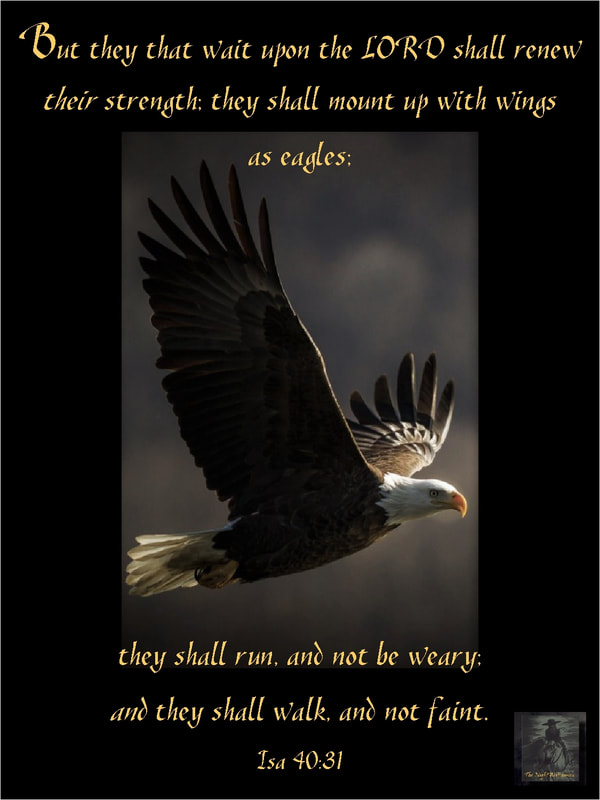
But this is that which was spoken by the
prophet Joel; And it shall come to pass in the last days, saith God, I will pour out of my Spirit upon all flesh: and your sons and your daughters shall prophesy, and your young men shall see visions, and your old men shall dream dreams: And on my servants and on my handmaidens I will pour out in those days of my Spirit; and they shall prophesy: Act 2:16-18 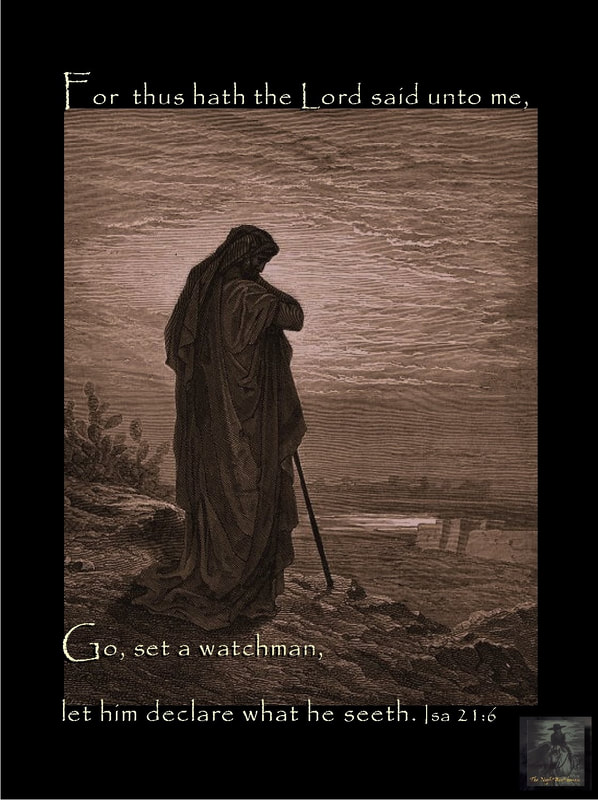
Resources
Madame Guyon - A Short and Easy Method of Prayer / Christian Audio Book (1 / 2) https://youtu.be/eihZWpAk7y4?si=PQ-_J3Y6i8u-N2Ac Union With God By Jeanne Guyon Chapter 1 Of 7 https://youtu.be/d5AfKS2dFLg?si=VtWAeEurkAddTDpL The Practice of the Presence of God - audiobook Brother LAWRENCE (1614 - 1691)- https://youtu.be/rRAs_BK1NR8?si=hGAL4C829aH7 DKMn Gander Story Poems
https://www.gander poems.org/ 
Archives
October 2026
|

