|
Short Devotions/Scripture/Poetry/Quotes All materials in this page are from uncopyrighted writings from my own online bible, or, free public domain online. The majority of the photos and graphic images on this page, and the rest of this site are my own, with few exceptions. AI is never used. ++++++++++++ Page is Paused +++++++ Come Ye Apart To the chief Musician, Maschil, for the sons of Korah. As the hart panteth after the water brooks, so panteth my soul after thee, O God. My soul thirsteth for God, for the living God: when shall I come and appear before God? Psa 42:1-2 +++++++ And he said unto them, Come ye yourselves apart into a desert place, and rest a while: for there were many coming and going, and they had no leisure so much as to eat. And they departed into a desert place by ship privately. Mar 6:31-32 “Ease he did not seek, honor he did not covet, but the enjoyment of communion with God was an urgent need of his soul; he viewed it not merely as the sweetest of all luxuries, but as an absolute necessity, like water to a stag.” My soul thirsts for God, for the living God: The psalmist wasn’t thirsty for water, but for God. Drinking and thirst are common pictures of man’s spiritual need and God’s supply. Here, the emphasis is on the desperation of the need. One may go many days without food, but thirsts shows an even more urgent need. “Which is more than hungering; hunger you can palliate, but thirst is awful, insatiable, clamorous, deadly.” "The soul of man has no resource independent of God"- A camel does not pant after water brooks, because it carries its own water within it; but the hart does, because it has no inward resources. After being hunted on a hot day, it has no inward supplies; it is drained of its moisture. So are we. We do not carry a store of grace within of our own upon which we can rely; we need to come again, and again, and again, to the Divine fountain, and drink again from the eternal spring. Hence it is because we have a new life, and that life is dependent upon God, and has all its fresh springs in Him, that therefore we pant and thirst after Him. O Christian, if you had a sacred life which could be maintained by its own energies within, you might do without your God, but since you are naked, and poor, and miserable, apart from Him, you must come and drink day by day of the living springs, or else you faint and die." (excerpts from C. H. Spurgeon)
"Knowledge of the Work we are Doing—By going apart for rest we shall gain a bird’s-eye view of the field of life and duty. In the midst of life’s moving affairs we see life fragmentarily and not entire. We note a text, but not a context. We see items, but we are blind to their relationships. We see facts, but we do not mark their far-reaching issue and destiny. We are often ill-informed as to the true size of a thing which looms large in the immediate moment. Things seen within narrow walls assume an appalling bulk. A lion in your back yard is one thing; with a continent to move in, it is quite another. There are many feverish and threatening crises which would dwindle into harmless proportions if only we saw them in calm detachment. There are some things which we can never see with true interpretation until we get away from them. There is nothing more hideous and confusing than an oil painting when viewed at the distance of an inch. To see it we must get away from it." (Note: H. Lucas-Great Texts) Sins to be Eschewed If it be possible, as much as lieth in you, live peaceably with all men. Rom 12:18 +++++++ For he that will love life, and see good days, let him refrain his tongue from evil, and his lips that they speak no guile: Let him eschew evil, and do good; let him seek peace, and ensue it. For the eyes of the Lord are over the righteous, and his ears are open unto their prayers: but the face of the Lord is against them that do evil. 1Pe 3:10-12 "We are to do our utmost endeavors to preserve peace, and to appease the anger and malice of others. We are not to “begin” or to “originate” a quarrel. So far as “we” are concerned, we are to seek peace. But then it does not always depend on us. Others may oppose and persecute us; they will hate religion, and may slander, revile, and otherwise injure us; or they may commence an assault on our persons or property. For “their” assaults we are not answerable; but we are answerable for our conduct toward them; and on no occasion are we to commence a warfare with them. It may not be “possible” to prevent their injuring and opposing us; but it is possible not to begin a contention with them; and “when they” have commenced a strife, to seek peace, and to evince a Christian spirit. This command doubtless extends to everything connected with strife; and means that we are not to “provoke” them to controversy, or to prolong it when it is commenced; see Psa_34:14; Mat_5:9, Mat_5:39-41; Heb_12:14. If all Christians would follow this command, if they would never “provoke” to controversy, if they would injure no man by slander or by unfair dealing, if they would compel none to prosecute them in law by lack of punctuality in payment of debts or honesty in business, if they would do nothing to irritate, or to prolong a controversy when it is commenced, it would put an end to no small part of the strife that exists in the world." (Excerpt from Albert Barnes)
Let him seek - To live peaceably with all men. And pursue it - Even when it seems to flee from him. (John Wesley) Psa 37:27 Depart from evil, and do good; and dwell for evermore. Mat 6:13 And lead us not into temptation, but deliver us from evil: For thine is the kingdom, and the power, and the glory, for ever. Amen. 3Jn 1:11 Beloved, follow not that which is evil, but that which is good. He that doeth good is of God: but he that doeth evil hath not seen God. Jas 3:17 But the wisdom that is from above is first pure, then peaceable, gentle, and easy to be intreated, full of mercy and good fruits, without partiality, and without hypocrisy. Jas 3:18 And the fruit of righteousness is sown in peace of them that make peace. Note: There is not one, who can read this, and not find themselves here, and memories of things we've allowed in our lives, that shouldn't have been done, or said. All have sinned, and come short of the glory of God. The remedy-sincere repentance in prayer, and asking the Lord for His forgiveness, and mercy. This is what Jesus came for, and as the Savior and Redeemer, He still stands as our High Priest, and intercedes for us. If your honest with God, and come to Him truly wanting to be forgiven-He stands waiting for you. Don't let self-deception or pride, keep you away. 1Jn 1:6 If we say that we have fellowship with him, and walk in darkness, we lie, and do not the truth: 1Jn 1:7 But if we walk in the light, as he is in the light, we have fellowship one with another, and the blood of Jesus Christ his Son cleanseth us from all sin. 1Jn 1:8 If we say that we have no sin, we deceive ourselves, and the truth is not in us. 1Jn 1:9 If we confess our sins, he is faithful and just to forgive us our sins, and to cleanse us from all unrighteousness. The Mind of Christ-The Redeemer Let this mind be in you, which was also in Christ Jesus: Who, being in the form of God, thought it not robbery to be equal with God: But made himself of no reputation, and took upon him the form of a servant, and was made in the likeness of men: And being found in fashion as a man, he humbled himself, and became obedient unto death, even the death of the cross. Wherefore God also hath highly exalted him, and given him a name which is above every name: That at the name of Jesus every knee should bow, of things in heaven, and things in earth, and things under the earth; And that every tongue should confess that Jesus Christ is Lord, to the glory of God the Father. Php 2:5-11 "In all Scripture-indeed, in all literature-there is no passage which combines such extraordinary extremes as this. The Apostle opens the golden compasses of his faith, placing one jeweled point on the throne of divine glory and the other at the edge of the pit, where the Cross stood; and then he asks us to measure the vast descent of the Son of God as He came down to help us.
The Mind of Christ-Our Example: A fearless mind. He braved-- 1. Public opinion. 2. Persecution. 3. Death. A self-denying mind: and such in us will enable us, like Him, to forego-- 1. Present advantage for the good of others. 2. Popularity for the sake of principle. 3. Personal claims, profit and pleasure for usefulness. A laborious mind. Christ was ever thinking, planning, devising for others. A broadly sympathetic mind. Helpfulness should be united with tenderness. A patient mind. How He waited those thirty years; how He bore with the ignorance of His disciples, and the malignity of His murderers. A hopeful mind. He saw beyond the cross. “He saw of the travail of His soul and was satisfied.” (H. B. Rawnsley.) Leaves in the Wind But we are all as an unclean thing, and all our righteousnesses are as filthy rags; and we all do fade as a leaf; and our iniquities, like the wind, have taken us away. Isa 64:6 “Filthy rags is ‘a garment of menstruation’; bodily discharges were considered a defilement because they were the ‘outflow’ of a sinful, fallen human nature. So, even what we might consider to be in our favor, righteous acts, partake of the defilement of fallenness.” (Motyer) "However extreme the phrasing, the point is important. Even the works that seem holiest from the outside can be corrupt and unrighteous. “Sirs, there is sin in our prayers; they need to be prayed over again. There is filth in the very tears that we shed in penitence; there is sin in our very holiness; there is unbelief in our faith; there is hatred in our very love; there is the slime of the serpent upon the fairest flower of our garden.” (Spurgeon) “Those that seek to be saved by their works, Luther fitly calleth the devil’s martyr's; they suffer much, and take great pains to go to hell... We must do all righteousnesses, rest in none by Christ’s, disclaiming our own best as spotted and imperfect.” (Trapp)
"The leaf fades, and man fades" It falls and to dust it returns. So it is with man. These bodies will in a few years be trodden on by the beast or borne away by the winds. What a great variety there is in the foliage of nature. Some leaves are larger and decked in more lovely hues than others. Some grow in a richer soil, and are breathed on by more salubrious winds than others. But let a few weeks pass away and all these distinctions will be lost, all will be dust. It is ever so in society. We see there great variety. Some are in wealth, some in poverty; some in velvet, some in fustian; some in beauty, some in deformity; some in the pomp of power, and some in the misery of oppression. But let a few years pass round, and our princes and peasants, sovereigns and subjects, despots and serfs, masters and menials will be dust. "As a Christian, we see the lessons to be learned: The New Testament describes my body as a robe. Here are outer garments of cotton and wool. Then there is another garment of flesh. And then there is the soul, the man, the woman. That is the Christian conception—the flesh is the garment, it is not the man. Tell your children that growing old and infirm just means that the flesh garment is getting worse for wear, and that the soul is preparing for itself another garment that will never wear out, a spiritual garment, a garment of immortality and light. Tell them that death just means that the spirit has dropped its old clothes, its robe of flesh, and has clothed itself with the garment that is from heaven." (Biblical Illustrator) Joh 14:2 In my Father's house are many mansions: if it were not so, I would have told you. I go to prepare a place for you. Joh 14:3 And if I go and prepare a place for you, I will come again, and receive you unto myself; that where I am, there ye may be also. The Devil’s Bargain And the devil, taking him up into an high mountain, shewed unto him all the kingdoms of the world in a moment of time. And the devil said unto him, All this power will I give thee, and the glory of them: for that is delivered unto me; and to whomsoever I will I give it. If thou therefore wilt worship me, all shall be thine. And Jesus answered and said unto him, Get thee behind me, Satan: for it is written, Thou shalt worship the Lord thy God, and him only shalt thou serve. Luk 4:5-8 "All these things will I give thee. All disguise is laid aside. Satan claims to be the Prince of the world and the disposer of human kingdoms. Jesus came to be a King, but the pathway to the crown is weary, painful, beset with thorns and blood. Satan proposes an easier way. He will rally the Jewish nation around him, set him on the throne of David, make him the Messiah King of the world, if he will only consent to give up his idea of a spiritual kingdom, "not of this world," and worship the god of this world by conforming his kingdom to the worldly ideas of Israel. The temptation is to turn away from the path of self-denial, the cross and the tomb, and to establish an outward, worldly domain. Get thee hence, Satan. As the tempter was revealed Jesus rebukes him. The word, "Get thee hence," "begone," expresses abhorrence. The adversary is called by name and bidden to depart. Then his reason is added, in the words of Scripture, found in Deu_6:13. Deu 6:13 Thou shalt fear the LORD thy God, and serve him, and shalt swear by his name.
Get Thee Behind Me, Satan-It is Written: Throughout this warfare, Jesus uses one weapon, the word of God, in it's proper use, to cast down the temptations of the devil. In this account in the gospels we are shown by the Lord how to use the word of God to gain the victory in our battles, when they come. Sadly, the vast majority of people today, are biblically illiterate, and many have no faith in the word of God, and Satan knows it, this is why this world is in the condition it's in. But there is a remnant, who do stand with Christ, and do know how to use His word. We know the battles today are fierce, because we are in the last days, which Jesus describes in Mat. ch 24, the devil knows his time is short. Complete Surrender And there went great multitudes with him: and he turned, and said unto them, If any man come to me, and hate not his father, and mother, and wife, and children, and brethren, and sisters, yea, and his own life also, he cannot be my disciple. And whosoever doth not bear his cross, and come after me, cannot be my disciple. Luk 14:25-27 +++++++ He that loveth father or mother more than me is not worthy of me: and he that loveth son or daughter more than me is not worthy of me. Mat 10:37 "Complete surrender of earthly things are the indispensable condition of discipleship, is the teaching of this passage. Crowds followed Christ, but He will have no recruits enlisted on false pretences, and rather discourages than stimulates inconsiderate adhesion. The clear presentation of difficulties stifles no genuine earnestness, but rather fans the flame. Christ would have the light-minded crowds, following Him with curiosity, understand that it is no holiday stroll nor triumphal march in which they are joining, but a procession to a cross. So, if they are not ready for that, they had better not come after Him, and, at any rate, must come with their eyes open, if at all.
What gives Him the right, and how can He satisfy the love which He demands? Surely He who thus speaks must be conscious of Divinity, or His claim is blasphemous. Surely He not only is, but does, what deserves and draws, and will bless with full fruition the fullest love of every heart. The second requirement applies to conduct. The first calls for the surrender of the dearest; the second, for the acceptance of the most painful. There is here a veiled allusion to Christ’s own cross, as if He had said, “I, on this journey in which you are following Me so blindly and eagerly, am going to My cross. If you could see, it is already lying on My shoulder. If you follow Me, you, too, will have to carry a cross.” Note the two halves of conduct which together make up real discipleship—taking up each the cross which is his own, and imitating Christ. Every true Christian has his own special burden of humiliation, difficulty, self-denial, to carry. The cross is heavy, and hard to carry; but unless we do carry it, we are not His. And all the procession of cross-bearers go after the Lord. If we follow after Him, our crosses grow light, remembering His, and with Him for leader and companion." (Preacher's Homiletical) The Enduring Word The grass withereth, the flower fadeth: but the word of our God shall stand for ever. Isa 40:8 "In A.D. 303, the Roman Emperor Diocletian demanded that every copy of the Scriptures in the Roman Empire be burned. He failed, and 25 years later, the Roman Emperor Constantine commissioned a scholar named Eusebius to prepare 50 copies of the Bible at government expense. Voltaire, the French skeptic and infidel who died in 1778, said that 100 years from his time, Christianity would be swept from existence and passed into history, and that the Bible would be a forgotten book. Many years after Voltaire’s death, the Geneva Bible Society used his press and his house to produce stacks of Bibles.
"And this is the word, which by the Gospel is preached unto you; who seems to distinguish the word from the Gospel, by which it is preached, and to intend Christ the essential Word; who stands or abides for ever as a divine Person; in his office as Mediator, being Prophet, Priest, and King for ever; in the efficacy of his blood, righteousness, and sacrifice; and in the fulness of his grace: it is true of the written word or Gospel, which remains, is everlasting, and will stand and continue, notwithstanding the persecutions of tyrants, the craft of false teachers, the reproach of ungodly men, and the death of the best of men, even of ministers; though all flesh is grass, fading and withering, the word of God is fresh and lively, firm and durable; and so it is as transcribed into the hearts of men, where it becomes the ingrafted word, and issues in everlasting life. It may be applied to God's word of promise, which is forever settled in heaven, and is always fulfilled." (John Gill) Come and Drink In the last day, that great day of the feast, Jesus stood and cried, saying, If any man thirst, let him come unto me, and drink. He that believeth on me, as the scripture hath said, out of his belly shall flow rivers of living water. Joh 7:37:38 THE TIME. The last and great day of the feast when Israel’s joy, in appearance, was at the fullest, and when there seemed least need of any other joy. THE PLACE. Jerusalem—the Temple. What need of anything else than what the Temple afforded: particularly through the teachings of this feast. THE GIVER. The Son of God, and not merely a prophet, who knew what they needed, and what He had to give; Himself- God’s own gift. To Himself He, as ever, turns their eye. “Come unto Me.” Feasts, altars, sacrifices, doctrines, ceremonies, were all vain.
Mat 11:28 Come unto me, all ye that labour and are heavy laden, and I will give you rest. Mat 11:29 Take my yoke upon you, and learn of me; for I am meek and lowly in heart: and ye shall find rest unto your souls. Mat 11:30 For my yoke is easy, and my burden is light. The Meddler-The Liar-The Talebearer He that passeth by, and meddleth with strife belonging not to him, is like one that taketh a dog by the ears. As a mad man who casteth firebrands, arrows, and death, So is the man that deceiveth his neighbour, and saith, Am not I in sport? Where no wood is, there the fire goeth out: so where there is no talebearer, the strife ceaseth. As coals are to burning coals, and wood to fire; so is a contentious man to kindle strife. The words of a talebearer are as wounds, and they go down into the innermost parts of the belly. Pro 26:18-22 Defining the Man of Mischief The meddler (Pro_26:17). 1. His conduct defined. 2. His mischief indicated. Renders himself liable to the anger of one, if not both, of the contending parties. The liar (Pro_26:18-19). 1. By his false representations he involves his neighbor in some embarrassment, contention, or pain, and then excuses himself by saying, “It is in sport.” A lie is no less a lie because spoken in the spirit of frolic and jest. 2. Many a practical jester does the maniac’s mischief without the maniac’s excuse. The querulous (Pro_26:21). He is a social incendiary. The talebearer (Pro_26:22). 1. He maintains strife. As the microscopic sting of a little insect sometimes poisons the blood and influences the body of a strong man, the mere whisper of a talebearer will kindle the fire of discord in a whole community. 2. He infects with poison. His words destroy the mental peace of him to whom they are uttered, the reputation of him of whom they are uttered, and the social happiness of both." (D. Thomas, D. D.)
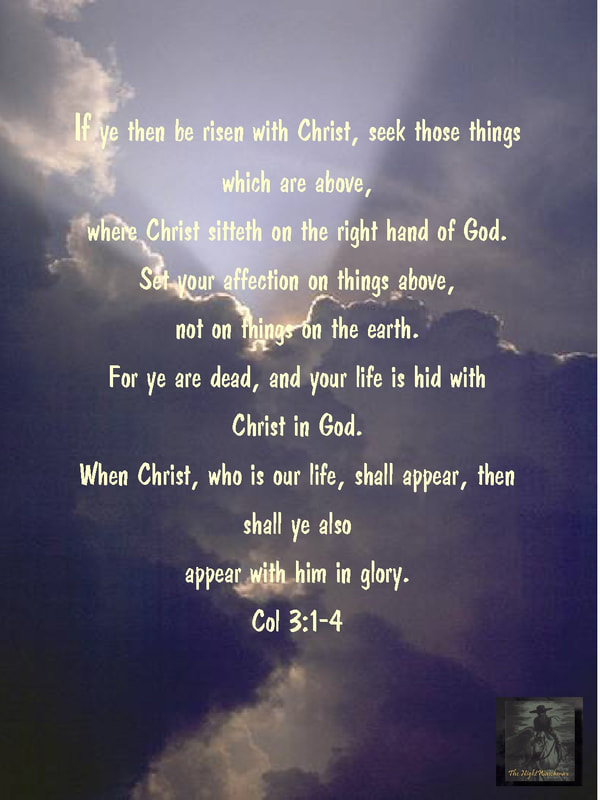
"The wise man may here be regarded as passing from one extreme of character to the other—from the man who is too indolent to mind his own affairs, to one whose activity is so great that it leads him to unnecessary interference with his neighbor’s business. Or he may intend to suggest that indolence and meddling are very closely allied—that he who is not usefully occupied in doing his own work will be very apt to interfere impertinently with the concerns of others. Such a meddler brings trouble upon himself. It is a dangerous thing to take a strange dog by the ears, and he who does it will be very likely to suffer for it in his own person, for the creature will probably wound him. But he who meddles impertinently with those who are at strife has to deal, not with one angry brute, but with two angry men or women, and will very likely bring down the wrath of both upon his own head. For it is to be noted that the strife with which it is mischievous to intermeddle is that “which belongeth not to” a man—a quarrel in which an outsider has no right to take a part. He may do harm to others. To take a dog by the ears is at least, a foolish and useless act, and will certainly not increase the comfort or peace of anybody. But it may so enrage the beast as to make him a general disturber of the public peace and safety. And the same holds good in relation to meddlers; the mischief that they do may extend far beyond themselves, and their action may form a center of a wide circle of mental disquietude and moral mischief." (Preacher's Homiletical) Seek Things Above If ye then be risen with Christ, seek those things which are above, where Christ sitteth on the right hand of God. Set your affection on things above, not on things on the earth. For ye are dead, and your life is hid with Christ in God. When Christ, who is our life, shall appear, then shall ye also appear with him in glory. Col 3:1-4 "The Christian life has a twofold aspect. Outwardly it is shorn of all splendors, and to the eye of the world appears a life of weakness, ignominy, and suffering; but inwardly it is radiant with divine light and pervaded with a heavenly peace. The believer is often as a monarch in the disguise of a beggar. The world knows nothing of the new life of which he has become possessed, and the new life must know nothing of the world. Its aspirations are directed towards higher things. The relish for earthly things is gone." (Preacher's Homiletical)
2Ti 4:8 Henceforth there is laid up for me a crown of righteousness, which the Lord, the righteous judge, shall give me at that day: and not to me only, but unto all them also that love his appearing. Tit 2:13 Looking for that blessed hope, and the glorious appearing of the great God and our Savior Jesus Christ; 1Jn 3:2 Beloved, now are we the sons of God, and it doth not yet appear what we shall be: but we know that, when he shall appear, we shall be like him; for we shall see him as he is. Sowing and Reaping And said, Where have ye laid him? They said unto him, Lord, come and see. Jesus wept. Joh 11:34-35 Jesus said, Take ye away the stone. Martha, the sister of him that was dead, saith unto him, Lord, by this time he stinketh: for he hath been dead four days. Jesus saith unto her, Said I not unto thee, that, if thou wouldest believe, thou shouldest see the glory of God? Joh 11:39-40 And when he thus had spoken, he cried with a loud voice, Lazarus, come forth. And he that was dead came forth, bound hand and foot with graveclothes: and his face was bound about with a napkin. Jesus saith unto them, Loose him, and let him go. Joh 11:43-44 +++++++ They that sow in tears shall reap in joy. Ps126:5 "Mary and Martha could not understand what their Lord was doing. Both of them said to Him, "Lord, if thou hadst been here, my brother had not died." Back of it all, we seem to read their thought: "Lord, we do not understand why you have stayed away so long. We do not understand how you could let death come to the man whom you loved. We do not understand how you could let sorrow and suffering ravage our lives when your presence might have stayed it all. Why did you not come? It is too late now, for already he has been dead four days!" And to it all Jesus had but one great truth: "You may not understand; but I tell you if you believe, you will see." Abraham could not understand why God should ask the sacrifice of the boy; but he trusted. And he saw the glory of God in his restoration to his love. Moses could not understand why God should keep him forty years in the wilderness, but he trusted; and he saw when God called him to lead forth Israel from bondage. Joseph could not understand the cruelty of his brethren, the false witness of a perfidious woman, and the long years of an unjust imprisonment; but he trusted, and he saw at last the glory of God in it all. Jacob could not understand the strange providence which permitted the same Joseph to be torn from his father’s love, but he saw the glory of God when he looked into the face of that same Joseph as the viceroy of a great king, and the preserver of his own life and the lives of a great nation. And so, perhaps in your life. You say, "I do not understand why God let my dear one be taken. I do not understand why affliction has been permitted to smite me. I do not understand the devious paths by which the Lord is leading me. I do not understand why plans and purposes that seemed good to my eyes should be baffled. I do not understand why blessings I so much need are so long delayed. Friend, you do not have to understand all God’s ways with you. God does not expect you to understand them. You do not expect your child to understand, only believe. Some day you will see the glory of God in the things which you do not understand.-- (J. H. McC -- Our Daily Walk)
Here, in the story of Jesus raising Lazarus from the dead we gain knowledge, and guidance in our own lives. We see the analogies, that what we sow in tears, we will reap in joy-if we stand in faith, and speak the truth, regardless of our circumstances, in spite of what we see with our eyes. Jesus wept, the shortest, but most profound statement in the bible. Consider this, when you think of what he feels for every individual, as he stood and shed tears for the dead Lazarus, and for those standing around, who did not believe him, or believe his ability to raise him from the dead-until they saw it with their eyes. He was full of grief for Lazarus, and all who do not believe him, even to this day. Jesus wept-and sowed in tears for the life of Lazarus. The sisters, and those standing around reaped the joy of seeing his resurrected life, when they saw him come forth, still wearing the grave clothes. Lorna Couillard An inspired proverb. A proverb is often helpful; an inspired proverb ought to be to us an inspiration. Write it down at the head of all your difficulties and in the midst of all your struggles; it is one of God’s own pithy sayings, a maxim He Himself has made—“They that sow in tears shall reap in joy.” The Treatment of a Fool Answer not a fool according to his folly, lest thou also be like unto him. Answer a fool according to his folly, lest he be wise in his own conceit. Pro 26:4-5 "There are many cases in which a fool is to be heard, and not answered at all. When a scorner reviles us, it is needless to reprove him for it. Our Lord often kept silence when impertinent questions were asked Him. But silence cannot be the rule in every situation.
"A certain preacher had wrought his best to benefit his audience; but one of them came to him, and somewhat rudely remarked, “Your preaching is of no use to me. I do not believe that I have a soul; I don’t want to be talked to about an imaginary hereafter. I shall die like a dog.” The minister calmly replied, “Sir, I have evidently failed through misapprehension. I did my best for the good of all my hearers; but I prepared the entertainment under the notion that I was catering for men with souls. Had I known there were creatures present who had no souls, and would die like dogs, I would have provided a good supply of bones for them.” (C. H. Spurgeon.) The Hem of His Garment And Jesus arose, and followed him, and so did his disciples. And, behold, a woman, which was diseased with an issue of blood twelve years, came behind him, and touched the hem of his garment: For she said within herself, If I may but touch his garment, I shall be whole. But Jesus turned him about, and when he saw her, he said, Daughter, be of good comfort; thy faith hath made thee whole. And the woman was made whole from that hour. Mat 9:19-22 "Jesus Christ was never in a hurry. He had no occasion to be so, because He was conscious of supreme power, and of a capacity to do whatever He in His perfect wisdom deemed right. So that you perceive nowhere throughout the whole of these Gospels the least sign of eager anxiety, the slightest indication of personal uncertainty. He moves on His way, quiet, comparatively undisturbed, with the calmness of conscious strength. This thought is suggested, because the incident before us shows our Lord allowing Himself to be interrupted in a great work which He had undertaken to do, and yet being undisturbed by the interruption. Why should the Son of God be in haste? Can He not do as He wills? Does He not come forth from the bosom of Him of whom it is said, "A thousand years in Thy sight are but as yesterday when it is past, and as a watch in the night"? Notice: That the touch of the diseased woman was an expression of conscious need. Necessity, trouble, incurable sorrow brings us to the Great Healer in some way or other.
"There may be much earthly rubbish in the soul that comes to Christ; but if there be in it one gleaming grain of the gold of faith, Christ will receive that soul with all its rubbish; for He knows well that in due time all that is worthless will drop away, that the eye of faith will sweep over a vaster horizon of truth from day to day, until we shall be light in the Lord, and shall not walk in darkness." (E. Mellor, D. D.) O Faithless Generation He answereth him, and saith, O faithless generation, how long shall I be with you? how long shall I suffer you? bring him unto me. Mark 9:19 "The first thing that seems to be in this lament is not anger, but a very distinct and very pathetic expression of Christ’s infinite pain, because of man’s faithlessness. The element of personal sorrow is most obvious here. All that men have ever felt—of how hard it is to keep on working when not a soul understands them, when not a single creature believes in them, when there is nobody that will accept their message, nor that will give them credit for pure motives,—Jesus Christ had to feel, and that in an altogether singular degree. There never was such a lonely soul on this earth as His, just because there never was another so pure and loving. In this short sharp cry of anguish, there may be detected by the listening ear not only the tone of personal hurt, but the tone of disappointed and thwarted love. Because of their unbelief He knew that they could not receive what He desired to give them. We find Him more than once in His life hemmed in, hindered, balked of His purpose,—thwarted in His design—simply because there was nobody with a heart open to receive the rich treasure that He was ready to pour out. Another thought which seems to me to be expressed in this wonderful exclamation of our Lord is, that their faithlessness bound Christ to earth, and kept Him there. As there is not anger, but only pain, so there is also, I think, not exactly impatience, but a desire to depart, coupled with the feeling that He cannot leave them till they have grown stronger in faith, and that feeling is increased by the experience of their utter helplessness and shameful discomfiture during His brief absence.
Sinful men may be looked upon as possessed of the devil-- 'In a hundred ways he tears them, and throws them down; he stops their intelligent speech, and sends them wallowing and foaming in sin. None but Jesus can do helpless sinners good. Even disciples fail. No priest can offer sufficient sacrifice; no man can redeem his brother. “Bring him unto Me!” Faith is in every case of instrumental usefulness positively indispensable. There are times when Christ Himself will do no mighty works because of unbelief. “O faithless generation!” How quickly this explains the coldness and backwardness of the churches. When faith is feeble, what faith there is may well be employed in securing more faith. “Help mine unbelief.” Pray to the “Lord,” even if the word be not in this verse; and pray “with tears” too." (C. S. Robinson, D. D.) Confidence in God At my first answer no man stood with me, but all men forsook me: I pray God that it may not be laid to their charge. Notwithstanding the Lord stood with me, and strengthened me; that by me the preaching might be fully known, and that all the Gentiles might hear: and I was delivered out of the mouth of the lion. And the Lord shall deliver me from every evil work, and will preserve me unto his heavenly kingdom: to whom be glory for ever and ever. Amen. 2Ti 4:16-18 "John Wesley once stood out very nobly in disregarding the eyes of men so long as he stood acquitted in the sight of God. Among his many persecutions are to be numbered the falling back of former friends, including his wife. These turned against him, and published many spiteful things, even defaming his character in a shocking manner. Brother Charles hastened off in alarm and indignation to inquire what defense Brother John would set up.
"And the Lord shall deliver me from every evil work - None of the evil designs formed against me to make me unfaithful or unsteady, to cause me to save my life at the expense of faith and a good conscience, shall succeed; my life may go, but he will preserve me unto his heavenly kingdom. A continuance on earth the apostle expects not; but he has glory full in view, and therefore he gives God glory for what he had done, and for what he had promised to do." (Adam Clarke) The Beauty and Aroma of God Two Minutes Daily posted-9/15/2026 Awake, O north wind; and come, thou south; blow upon my garden, that the spices thereof may flow out. Let my beloved come into his garden, and eat his pleasant fruits. Son 4:16 ++++++++++++ Out of Zion, the perfection of beauty, God hath shined. Psa 50:2 "Some of the spices mentioned in this chapter are quite suggestive. The aloe was a bitter spice, and it tells of the sweetness of bitter things, the bitter-sweet, which has its own fine application that only those can understand who have felt it. The myrrh was used to embalm the dead, and it tells of death to something. It is the sweetness which comes to the heart after it has died to its self-will and pride and sin. Oh, the inexpressible charm that hovers about some Christians simply because they bear upon the chastened countenance and mellow spirit the impress of the cross, the holy evidence of having died to something that was once proud and strong, but is now forever at the feet of Jesus. It is the heavenly charm of a broken spirit and a contrite heart, the music that springs from the minor key, the sweetness that comes from the touch of the frost upon the ripened fruit. And then the frankincense was a fragrance that came from the touch of the fire. It was the burning powder that rose in clouds of sweetness from the bosom of the flames. It tells of the heart whose sweetness has been called forth, perhaps by the flames of affliction, until the holy place of the soul is filled with clouds of praise and prayer. Beloved, are we giving out the spices, the perfumes, the sweet odors of the heart? -- The Love-Life of Our Lord." (Streams in the Desert)
“Out of Zion, the perfection of beauty, God hath shined.” The Lord is represented not only as speaking to the earth, but as coming forth to reveal the glory of his presence to an assembled universe. God of old dwelt in Zion among his chosen people, but here the beams of his splendour are described as shining forth upon all nations. The sun was spoken of in the first verse, but here is a far brighter sun. The majesty of God is most conspicuous among his own elect, but it is not confined to them; the church is not a dark lantern, but a candlestick. God shines not only in Zion, but out of her. She is made perfect in beauty by his indwelling and that beauty is seen by all observers when the Lord shines forth from her. Observe how with trumpet voice and flaming ensign the infinite Jehovah summons the heavens and the earth to hearken to his word." (Charles Spurgeon-Treasury of David) In the Midst of the Storm And the same day, when the even was come, he saith unto them, Let us pass over unto the other side. And when they had sent away the multitude, they took him even as he was in the ship. And there were also with him other little ships. And there arose a great storm of wind, and the waves beat into the ship, so that it was now full. And he was in the hinder part of the ship, asleep on a pillow: and they awake him, and say unto him, Master, carest thou not that we perish? And he arose, and rebuked the wind, and said unto the sea, Peace, be still. And the wind ceased, and there was a great calm. Mar 4:35-39 "Look at the illustrious sleeper. The greatest of all slept. Thus was He in all points like unto His brethren; the substance of His body was wasted and was repaired, renewed and restored by food; the brain and nerves were exhausted, and their power was renewed by sleep. A morbid piety and a false morality find virtue in wakefulness, when nature preaches forgetfulness and demands repose. Religion is rather in going to sleep when Nature has need of slumber, than in a forced watchfulness for its sake. Doubtless, Christ was often weary, and now we see Him at rest. He sleeps after the hard work of a very busy day. To cease from labour is as much a duty as to work; rest is pure and holy and good, when in season. To everything there is a season and a time, for every purpose under heaven there is a time to rest.
In the case before us, the disciples were awake, the Master was sleeping. Now, the Master sleeps not, slumbers not, and the disciples may, in season, safely, quietly, peacefully sleep. Let Christ be with you always, with you everywhere—with you at all times, with you in all circumstances. Seek to be conscious of His presence, and you will not only be safe, but you will feel blessed." (S. Martin, Penny Pulpit (New series), No. 389) Rest in the Lord Rest in the LORD, and wait patiently for him: fret not thyself because of him who prospereth in his way, because of the man who bringeth wicked devices to pass. Cease from anger, and forsake wrath: fret not thyself in any wise to do evil. For evildoers shall be cut off: but those that wait upon the LORD, they shall inherit the earth. Psa 37:7-9 "Restfulness should be the spirit in which action is concluded. The fretful anxiety which looks back upon faithful work is a denial of God and a weakening of the soul. This is a call to service with the fret taken away. There is no true rest for man save in the thought of God. Aubrey de Vere relates a conversation he had with Wordsworth in Lakeland. The poet remarked that travelers boasted much of Swiss mountains because they wore two or three times as high as the English, but he added, “I reply that the clouds gather so low on them that half of them remain commonly out of sight.” His visitor did not wish to contradict him, and so the poet went on declaiming. “You cannot see those boasted Swiss mountains when the clouds hang low.” “Certainly not,” replied the prudent visitor. Then, after a pause, his veracity prevailed, and he added,”:But I must admit you know that they are there.”
“Rest in the Lord.” This fifth is a most divine precept, and requires much grace to carry it out. To hush the spirit, to be silent before the Lord, to wait in holy patience the time for clearing up the difficulties of Providence - this is what every gracious heart should aim at. “Aaron held his peace:” “I opened not my mouth, because thou didst it.” A silent tongue in many eases not only shows a wise head, but a holy heart. “And wait patiently for him.” Time is nothing to him; let it be nothing to thee. God is worth waiting for. “He never is before his time, he never is too late.” In a story we wait for the end to clear up the plot; we ought not to prejudge the great drama of life, but stay till the closing scene, and see to what a finish the whole arrives. “Fret not thyself because of him who prospereth in his wall, because of the man who bringeth wicked devices to pass.” There is no good, but much evil, in worrying your heart about the present success of graceless plotters be not enticed into premature judgments - they dishonour God, they weary yourself. Determine, let the wicked succeed as they may, that you will treat the matter with indifference, and never allow a question to be raised as to the righteousness and goodness of the Lord. What if wicked devices succeed and your own plans are defeated! there is more of the love of God in your defeats than in the successes of the wicked." (Charles Spurgeon-Treasury of David) The Unchanging Christ Two Minutes Daily posted-9/12/2026 Jesus Christ the same yesterday, and to day, and forever. Heb 13:8 "The writer of this epistle has been speaking of change. The old covenant was no more. The “many priests” had not continued by reason of death. The eleventh chapter is the record of the multitudes who had gone without seeing that for which they waited. This perpetual change was continuing itself in the Church. The Jewish Christians had seen their leaders taken away It is as with a sigh of weariness that the writer closes his admonition to remember these, to call to mind their fidelity in death. Then the ejaculation is uttered by him, broken and fragmentary, but the breathing of a name: “Jesus Christ yesterday and to-day the same, and forever.” All is not changeful; He abides. The teachers go; Jesus Christ remains. You have other leaders, we have other fellow-laborers; but not another Lord. So He rests, so they may rest; Jesus Christ is the same yesterday, and to-day, and for ever.
The words of the text are intended to give us just this assurance. The secret of our confidence in a changing world is the unchangeable Christ. Let time bring with it what it may, we are assured of His fidelity. “Yesterday” we found Him precious; He is the same “to-day,” solacing our newest grief. “Yesterday” we heard His voice; His name was on the lips of those who spoke to us the word of God. The teachers are gone, or we have outgrown them. But He is still the same; the Truth is with us. The deep reality of life abides the same. The words “for ever” fall strangely on our ears; the solemn future is unknown and unimaginable. We often fall back baffled in our endeavours to grasp the mystery of the world to come. But again the thought of the immutable One bears us up, out of the confusion of changing things. There will be more familiarity than strangeness there, for “Jesus Christ is the same yesterday, to-day, and forever.” He will not be unknown; He will be recognized who quickened, guided, sustained us, who was the steadfastness and identity of our passing earthly life. To those Christians who would read the words translated “for ever” in their original form, “unto the ages,” they would have a further suggestion. They were accustomed to look on God’s purpose in the universe as unfolding itself in a series of eons or dispensations. In the world to come there may be further dispensations, each fulfilling a thought, and all illustrating the mighty being of God. Here are changes, grand, stupendous, unimaginable. But in the midst of all, is seen one unchanging Christ. Let dispensation follow dispensation, and the eons of the eons still open up, and broaden out, and deepen on, and lengthen themselves, immeasurable, inconceivable; Jesus Christ is “the same unto the ages.” The text does not speak of a thing that is the same, or even of a truth conceived to be the same, but of a Person who is the same. It is in our personal relations that we feel the identity or the changes of life. It is a Person, abiding ever, unchanging ever. He who is most of all to us, the life of our soul, whose love awoke us to life’s true value, whose care gave us first to know how deep and real friendship may be. Amidst the flux of things, the flow of events, the heart rests on one unchanging Friend." (A. Mackennal, B.A., D.D) The Wicked-As a Troubled Sea There is no peace, saith my God, to the wicked. Isa 57:21 "A true picture of that continued state of restlessness, uncertainty, and apprehension in which the wicked are held daily by the terrors of an alarmed conscience; or even by the distrust and anxiety they are doomed to experience in the very midst of their fancied freedom and enjoyments! Whoever has looked upon the ocean when tossed by storm and tempest, must acknowledge that the prophet could have selected no better comparison to depict to the life the state of a sinner’s spirit. The sea cannot, if it would, sink to repose, but is doomed to heave wave after wave uselessly to the shore, till the mind of the spectator is oppressed with a sense of weariness, and almost sorrow for such incessant and fruitless tossings. Such, exactly, is the state of the sinner’s mind; it cannot rest. With the stain of unrepented sin on the conscience, the mind can enjoy no peace, can taste no rational pleasure.
“Their minds are restless, being perpetually hurried and tormented with their own lusts and passions, and with the horror of their guilt, and the dread of Divine vengeance due unto them, and ready to come upon them.” (Poole) "There is no peace, saith my God, to the wicked. They have no share in the peace made by the blood of Christ; they have no true, solid, inward peace of conscience; nor will they have any part in the happiness and prosperity of the church and people of God in the latter day, which will but add to their uneasiness; and will have no lot and portion in the eternal peace which saints enjoy in the world to come; and of this there is the strongest assurance, since God, the covenant God of his people, has said it." (John Gill) Commit All to God Two Minutes Daily posted 10/10/2026 Trust in the LORD, and do good; so shalt thou dwell in the land, and verily thou shalt be fed. Delight thyself also in the LORD; and he shall give thee the desires of thine heart. Commit thy way unto the LORD; trust also in him; and he shall bring it to pass. Psa 37:3-5 "God is building up a kingdom that is invisible—a kingdom of holy thoughts, of pure feelings, of faith, of hope, of righteousness. God’s kingdom is advancing surely, though it advances slowly, and though it is invisible to us. Here then is the foundation of our faith, our hope, our patient waiting. We are to rest on the fact that God is carrying on a work in this world; that He never forgets that work; that He never lets it lag or linger; that it is ever going forward, though we may not see it advance, and though it may seem to be receding.
Psa 55:22 Cast thy burden upon the LORD, and he shall sustain thee: he shall never suffer the righteous to be moved. Pro 16:3 Commit thy works unto the LORD, and thy thoughts shall be established. Luk 12:22 And he said unto his disciples, Therefore I say unto you, Take no thought for your life, what ye shall eat; neither for the body, what ye shall put on. Luk 12:23 The life is more than meat, and the body is more than raiment. Luk 12:24 Consider the ravens: for they neither sow nor reap; which neither have storehouse nor barn; and God feedeth them: how much more are ye better than the fowls? Preach Christ-Fear Not Fear them not therefore: for there is nothing covered, that shall not be revealed; and hid, that shall not be known. What I tell you in darkness, that speak ye in light: and what ye hear in the ear, that preach ye upon the housetops. Mat 10:26-27 "What I tell you in darkness,.... Hence Christ proceeds to encourage his disciples to an open, plain, and faithful ministration of the Gospel, not fearing the faces and frowns of men. For with respect to the Gospel, his meaning is, that what was hid and covered should not remain so, but should be revealed, and made known, and they were the persons who were to do it; and it was with that view that he had communicated it to them: and whereas he had told them it "in darkness"; not in a dark and obscure manner; for though he spoke in parables to others, yet to them he made known the mysteries of the kingdom of heaven: and if at any time he delivered parables, or dark sayings, to them, he would afterwards, or when alone, explain them to them.
Act 4:10 Be it known unto you all, and to all the people of Israel, that by the name of Jesus Christ of Nazareth, whom ye crucified, whom God raised from the dead, even by him doth this man stand here before you whole. Act 4:11 This is the stone which was set at nought of you builders, which is become the head of the corner. Act 4:12 Neither is there salvation in any other: for there is none other name under heaven given among men, whereby we must be saved. Satisfaction of the Future As for me, I will behold thy face in righteousness: I shall be satisfied, when I awake, with thy likeness. Psa 17:15 "The opening phrase of this verse is expressive of a noble singularity. “As for me.” The man who says that isolates himself in an attitude of moral grandeur from all that is base, carnal, and worldly. It is the utterance of moral manhood, of a soul that has the heroism to separate itself from the majority, and stand majestically aloof and alone in its superior choice. “As for me.” This is the motto of a spiritual aristocracy. Noblesse oblige. The man who utters it ranks himself with the world’s moral minorities. “As for me.” That is the language of true soul-nobility. And there are times when we too must dare to utter it, if we would be true to our higher nature and count for anything in the world.
It is a humble, thankful, moral, spiritual consciousness that this man, believing in God, loves Him, has communion with Him, and, under the influence of that Divine faith, keeps himself from the path of the destroyer, from the works and the society of the wicked." (Excerpt from - Ruskin, Modern Painters (Works, v. 259) "I will - I do not place my portion in earthly treasures, but in beholding God's face, in the enjoyment of God's presence and favour; which is enjoyed in part in this life, but not fully. Satisfied - The time is coming, wherein I shall be abundantly satisfied with beholding thy face. Awake - When I arise from the dead. Likeness - With the image of God stamped upon my glorified soul." (John Wesley) Faith-Through the Roof Two Minutes Daily posted-9/7/2026 And they come unto him, bringing one sick of the palsy, which was borne of four. And when they could not come nigh unto him for the press, they uncovered the roof where he was: and when they had broken it up, they let down the bed wherein the sick of the palsy lay. When Jesus saw their faith, he said unto the sick of the palsy, Son, thy sins be forgiven thee. Mar 2:3-5 "Faith is full of inventions. The house was full, a crowd blocked up the door, but faith found a way of getting at the Lord and placing the palsied man before him. If we cannot get sinners where Jesus is by ordinary methods we must use extraordinary ones. It seems, according to Luk_5:19, that a tiling had to be removed, which would make dust and cause a measure of danger to those below, but where the case is very urgent we must not mind running some risks and shocking some proprieties. Jesus was there to heal, and therefore fall what might, faith ventured all so that her poor paralysed charge might have his sins forgiven. O that we had more daring faith among us! Cannot we, dear reader, seek it this morning for ourselves and for our fellow-workers, and will we not try to-day to perform some gallant act for the love of souls and the glory of the Lord.
This devotion though unsaid, touches on what God sees as faith, and faithfulness, and how it's completely different than what man thinks of being faithful. Real faith and faithfulness, has nothing to do with doing the same thing, the same way, like punching a time clock for work at the daily job at the warehouse, or day at the business office. In the bible the people God chose to do a work for Him, moved "as they were led by the Spirit". This devotion opens up the meaning of faithfulness, and that we are given brains for a reason, if something doesn't work one way-do it another way. If you can't travel long distances, or have hindrances in the work God's given you, ask God for His guidance on how to go about it. Don't allow the world to try to put you into a box, like the apostate churches today-who's goal is community action groups, and pot luck suppers. I use this computer, and the years I worked as a legal proofreader, and a bible teacher in churches over the years past-and have created these websites, to put in them what I believe God's moved me to post-and it can go around the world, without me leaving my home. I use everything I can, to spread the gospel, and what I believe God has put in my heart and spirit-and have plenty of obstacles come at me to do it-but, I battle on, and get it done. When God wants you to do something, you may well find yourself put out of the churches-and be preaching in the fields, or corners of the streets, like John Wesley and George Whitfield did. If those in the dead church buildings won't let you speak what God's given to you-do it whatever way you have an open door. Just make sure-it is the word of God your preaching, and not your own opinion. Let God's word be true, and every man a liar. Jesus Christ is the center, we are only the servants, working in His field. Lorna Couillard The River of Mercy There is a river, the streams whereof shall make glad the city of God, the holy place of the tabernacles of the most High. God is in the midst of her; she shall not be moved: God shall help her, and that right early. Psa 46:4-5 "The river. This I take to be the mercy of God; His kindness to the miserable. Just, He must needs be, for He would not be merciful if He were not just. But there are manifestations of His justice in which He takes no joy. “He taketh no pleasure in the death of the sinner;” but “He delighteth in mercy.” And sometimes its exhibitions are very tender—“it droppeth as the gentle dew from heaven upon the place beneath.” And how copious its store! it is a river, not a rill that can be turned aside by any pebble in its bed; but a river that sweeps triumphantly over and through every obstacle.
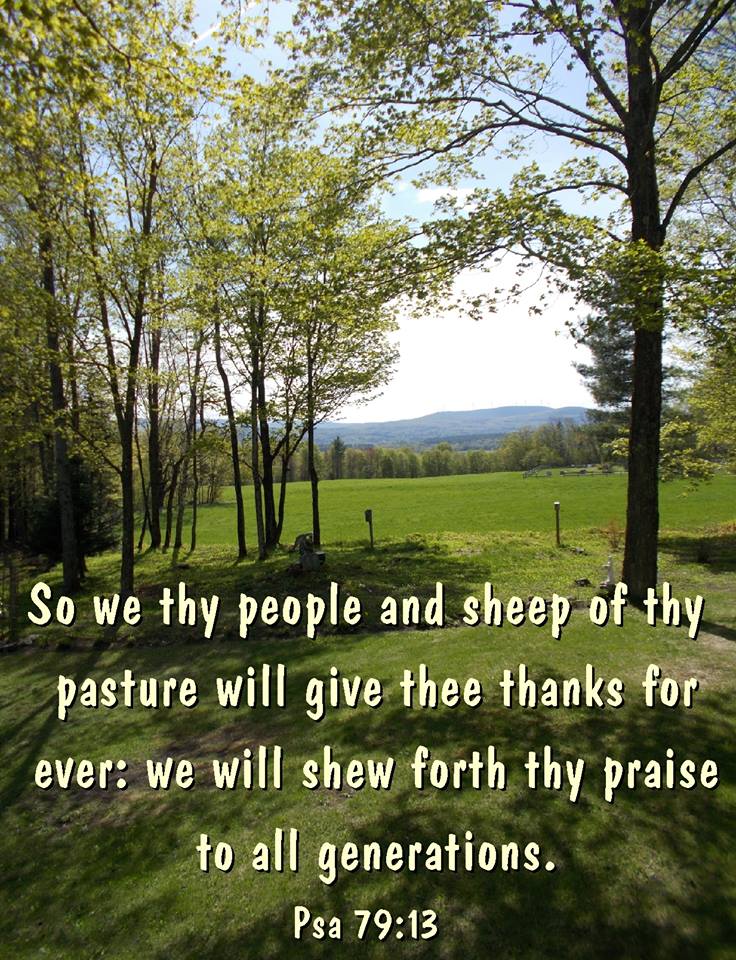
The channel - the Lord Jesus Christ. Through Him it flows down to man. The power that brings the streams close home to us, so that we may have the blessing, is the power of the Holy Spirit. See what He has already done in the Scriptures and in the Church." (F. Tucker, B. A) ++++++++++++ John describes this river in Revelation-that we will see with our eyes-when we are in that abode of glory with Christ: Rev 21:2 And I John saw the holy city, new Jerusalem, coming down from God out of heaven, prepared as a bride adorned for her husband. Rev 21:3 And I heard a great voice out of heaven saying, Behold, the tabernacle of God is with men, and he will dwell with them, and they shall be his people, and God himself shall be with them, and be their God. Rev 22:1 And he shewed me a pure river of water of life, clear as crystal, proceeding out of the throne of God and of the Lamb. Rev 22:2 In the midst of the street of it, and on either side of the river, was there the tree of life, which bare twelve manner of fruits, and yielded her fruit every month: and the leaves of the tree were for the healing of the nations. Rev 22:3 And there shall be no more curse: but the throne of God and of the Lamb shall be in it; and his servants shall serve him: Rev 22:4 And they shall see his face; and his name shall be in their foreheads. The Sheep of His Pasture Two Minutes Daily posted for 9/5/2026 So we thy people and sheep of thy pasture will give thee thanks for ever: we will shew forth thy praise to all generations. (79:13) So we thy people, and sheep of thy pasture,.... Who were the people of God, not by creation and providence only, as all men are, being his creatures, and provided for by him; but by special choice, and by covenant grace: and "the sheep of his pasture"; whom he feeds as a shepherd does his flock, provides good pasture for them, and leads them into it:
Psa 95:7 For he is our God; and we are the people of his pasture, and the sheep of his hand. To day if ye will hear his voice, Psa 100:3 Know ye that the LORD he is God: it is he that hath made us, and not we ourselves; we are his people, and the sheep of his pasture. Eph 2:10 For we are his workmanship, created in Christ Jesus unto good works, which God hath before ordained that we should walk in them. Sowing Tares Among the Wheat Another parable put he forth unto them, saying, The kingdom of heaven is likened unto a man which sowed good seed in his field: But while men slept, his enemy came and sowed tares among the wheat, and went his way. Mat 13:24-25 "He proposed another parable - in which he farther explains the case of unfruitful hearers. The kingdom of heaven (as has been observed before) sometimes signifies eternal glory: sometimes the way to it, inward religion; sometimes, as here, the Gospel dispensation: the phrase is likewise used for a person or thing relating to any one of those: so in this place it means, Christ preaching the Gospel, who is like a man sowing good seed - The expression, is like, both here and in several other places, only means, that the thing spoken of may be illustrated by the following similitude. Who sowed good seed in his field - God sowed nothing but good in his whole creation. Christ sowed only the good seed of truth in his Church. " (John Wesley)
"The wise farmer recognized that the ultimate answer to tares among the wheat would only come at the final harvest. Knowing the explanation of this parable as explained in Mat_13:36-43, we understand why Jesus said it right after explaining the parable of the sower, especially with the seed that grew up among the thorns. “But one might ask whether the Messiah’s people should immediately separate the crop from the weeds; and this next parable answers the question negatively: there will be a delay in separation until the harvest.” (Carson) The Unprepared And while they went to buy, the bridegroom came; and they that were ready went in with him to the marriage: and the door was shut. Mat 25:10 "Note three sad features of the foolish virgins’ case which the text presents... I. Their Neglect. Having equipped themselves duly for taking part in the wedding march, by kindling their lamps, they omitted to ensure that the equipment should be maintained, carrying with them no oil for their lamps. There they were, at the moment, all right, in a condition of beautiful fitness; had the bridegroom burst upon them at once, over the hill upon the slope of which they gathered expectantly, there would have been no lack in them; they would have swept on brilliantly; but the trial to which his late arrival subjected them they had thoughtlessly failed to arm themselves for. They had not recognized the wisdom of making provision to keep alive the light they bore. II. Their Unreadiness. Through not having made provision for keeping their lamps alight, they were unprepared to attend the bridegroom; they missed the opportunity of joining the marriage procession, and accompanying it to the feast. "Watch," says Christ, "for ye know not the hour." The grand thing is to stand equipped—equipped for entering into and taking possession of whatever shall come. Life is a perpetual advent. The marriage supper is always laid in some guise or other. See to it, that you miss none of the things that are provided; but by preserving and fostering the divine in you—"Be ye also ready."
Rev 1:7 Behold, he cometh with clouds; and every eye shall see him, and they also which pierced him: and all kindreds of the earth shall wail because of him. Even so, Amen. Rev 22:12 And, behold, I come quickly; and my reward is with me, to give every man according as his work shall be. Rev 22:20 He which testifieth these things saith, Surely I come quickly. Amen. Even so, come, Lord Jesus. As a Watch in the Night Thou turnest man to destruction; and sayest, Return, ye children of men. For a thousand years in thy sight are but as yesterday when it is past, and as a watch in the night. Psa 90:3-4 “For a thousand years in thy sight are but as yesterday when it is past.” A thousand years! This is a long stretch of time. How much may be crowded into it, - the rise and full of empires, the glory and obliteration of dynasties, the beginning and the end of elaborate systems of human philosophy, and countless events, all important to household and individual, which elude the pens of historians. Yet this period, which might even be called the limit of modern history, and is in human language almost identical with an indefinite length of time, is to the Lord as nothing, even as time already gone.
The Gate to God’s Acre: It is the oldest of stories, sung in this oldest of psalms; of human weakness, turning in dismay from the change and decay about it, to find refuge in the eternity of God. We are not suffered to waste time in the attempt to comprehend the abstract truth of God’s eternity. We are lifted for the moment, in order that we may descend; suffered to grasp a few of the treasures of the Divine glory, that we may carry them back to glorify our earthly life. 1. This splendid thought of the Divine eternity is made to touch the shifting and inconstant character of our earthly state, by the single word “dwelling-place.” I am a wanderer on earth, there is an eternal home for me; I am sick of confusion and change, there is eternal abiding in Him who is “the same yesterday, to-day, and for ever,” and only a change “into the same image from glory to glory.” 2. But a correct view of the eternity of God conveys warning as well as comfort. The more it is studied, the stronger is the contrast into which it throws the brevity and uncertainty of human life. (1) The eternal power of God convicts us of helplessness. Notice the sharp contrast. “From everlasting to everlasting, O God,” Thy life is self-sustained—in Thine own power: man’s life, that gift in which he so exults and on which he presumes to play “such fantastic tricks before high heaven,”—that which flowers out in his pride and high endeavor, in his ambitions, plans, and grand enterprises, is a thing so little in his power, that Thou turnest him even unto the finest dust with a word; and, with another word,—“Return, ye children of men”—callest others into being to fill his place. (2) The eternal being of God is used to convict us of delusion. We measure life by false standards. The psalm brings us back to the true rule of measurement (Psa_90:4; Psa_90:12). (Excerpt of M. R. Vincent, D.D) The Everlasting God A Prayer of Moses the man of God. Lord, thou hast been our dwelling place in all generations. Before the mountains were brought forth, or ever thou hadst formed the earth and the world, even from everlasting to everlasting, thou art God. Psa 90:1-2 "Scripture certainly emphasizes in many places the frail and fleeting aspect of life; the thought of man’s mortality runs as a wail through many a psalm, and touches with pathos the heart of the prophet in his brightest visions. But then there is always in Scripture another side of the picture; and this is the higher, and in the sense of Scripture the truer, side. The good is the original, the substantive of which evil is the inversion. The good is being; the evil is but negation of being. This Psalm, so venerable in its materials that it has been attributed to Moses, is in the main a psalm of mortality; and yet its primary thought is not mortality, but eternity. It opens with the note of eternal being. The idea of the eternal stands as a great light in front of the darkness. Man is mortal, but God is; and God is the Eternal, the home, the dwelling-place, of all generations. This is the grand peculiarity of Hebrew and of Christian thought, that God is first, man only second; that the eternal Being is the true Being, the present visible or transitory being only the derivative being, appearing and then vanishing away, according to the direction of the other.
"Thou art God - Or, “Thou, O God.” The idea is, that he was always, and ever will be, God: the God; the true God; the only God; the unchangeable God. At any period in the past, during the existence of the earth, or the heavens, or before either was formed, he existed, with all the attributes essential to Deity; at any period in the future - during the existence of the earth and the heavens, or beyond - far as the mind can reach into the future, and even beyond that - he will still exist unchanged, with all the attributes of Deity. The creation of the universe made no change in him; its destruction would not vary the mode of his existence, or make him in any respect a different being. There could not be a more absolute and unambiguous declaration, as there could not be one more sublime, of the eternity of God. The mind cannot take in a grander thought than that there is one eternal and immutable Being. (Albert Barnes) Joh 8:58 Jesus said unto them, Verily, verily, I say unto you, Before Abraham was, I am. Heb 13:8 Jesus Christ the same yesterday, and to day, and for ever.  Comments are closed.
|

Welcome
Two minutes daily of devotions and content that hopefully will add a blessing and thoughtfulness to your day. 

Look To This Day
Look to this day, For it is the very life of life. In its brief course lie all the verities and realities of your existence: The glory of action, The bliss of growth, The splendor of beauty, For yesterday is a dream and tomorrow is only a vision; But today well lived makes every yesterday a dream of happiness, and every tomorrow a vision of hope. Look well, therefore, to this day Anonymous 
Archives
September 2026
|